
Falling Down
Andrew resolves to break fewer things, including his children

Before we married, I warned my wife that I will break things.
Then, in November 2018, I was watching our eight-month-old, and while I reached for my phone, he slipped off the couch and got his very first bruise.
That Christmas my wife gave me the slim novel Love, by the Norwegian writer Hanne Ørstavik. Love follows a mother and young son through their day—the boy wandering the icy streets, dreaming of the big plans his mother must be hatching for his birthday the next day, and the mother thrown far from his orbit by obscure ideas about work and a one-sided infatuation for a soft-spoken carnie. The mother forgets about her boy, and the consequences are grim.1
A few months later, on my way to the hospital where I work, I wrestled our clothes hamper down two narrow flights of stairs—a balancing act my wife performed countless times a week—and then exited from our laundry room to my car.2 I drove to work, opened a tab on my browser to scan for articles on artificial intelligence and Alzheimer’s disease, and then saw a text message from my wife.
“The good news is he’s okay,” it began. “The bad news is that Zade fell down the basement stairs because the door was left open.”
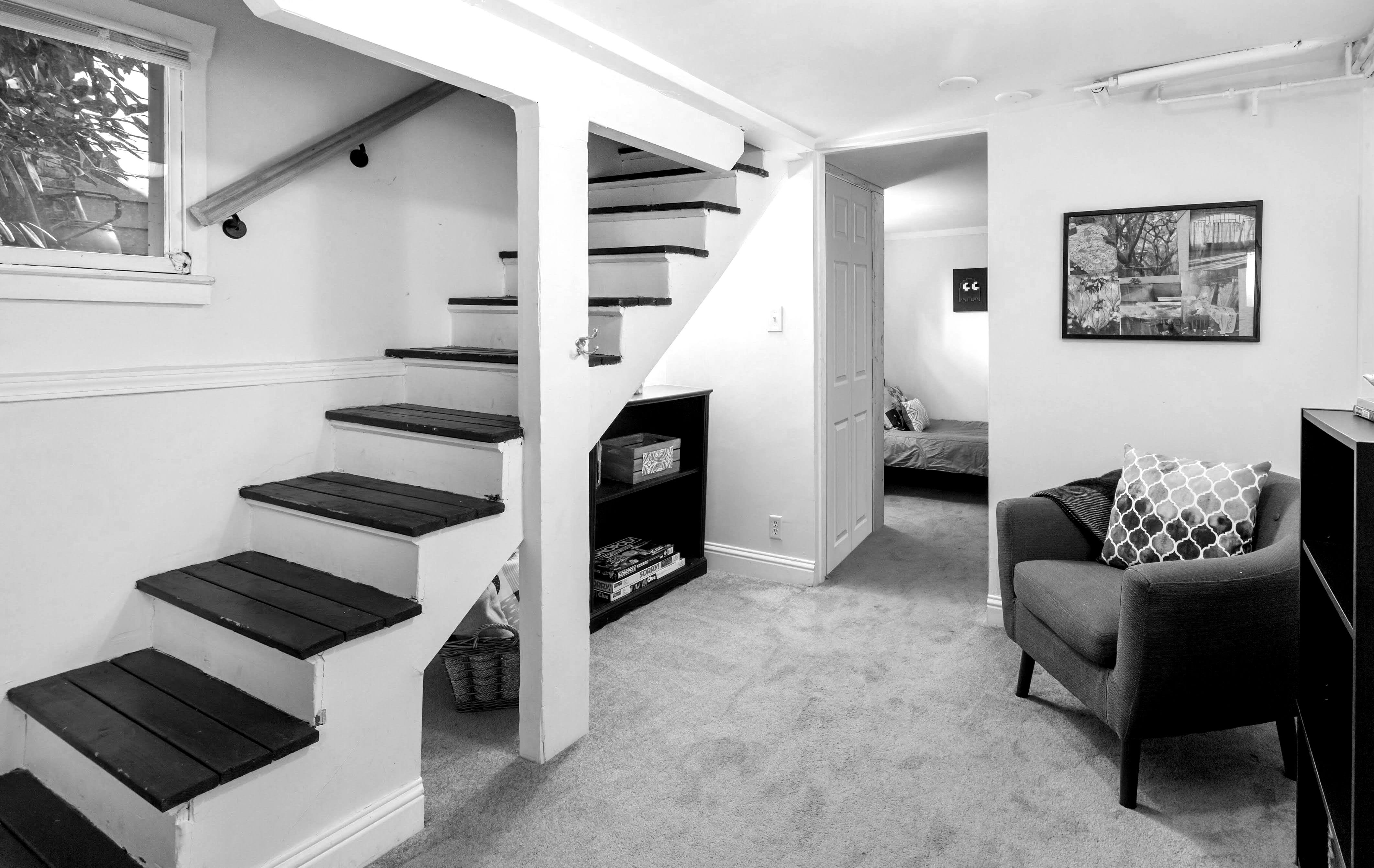
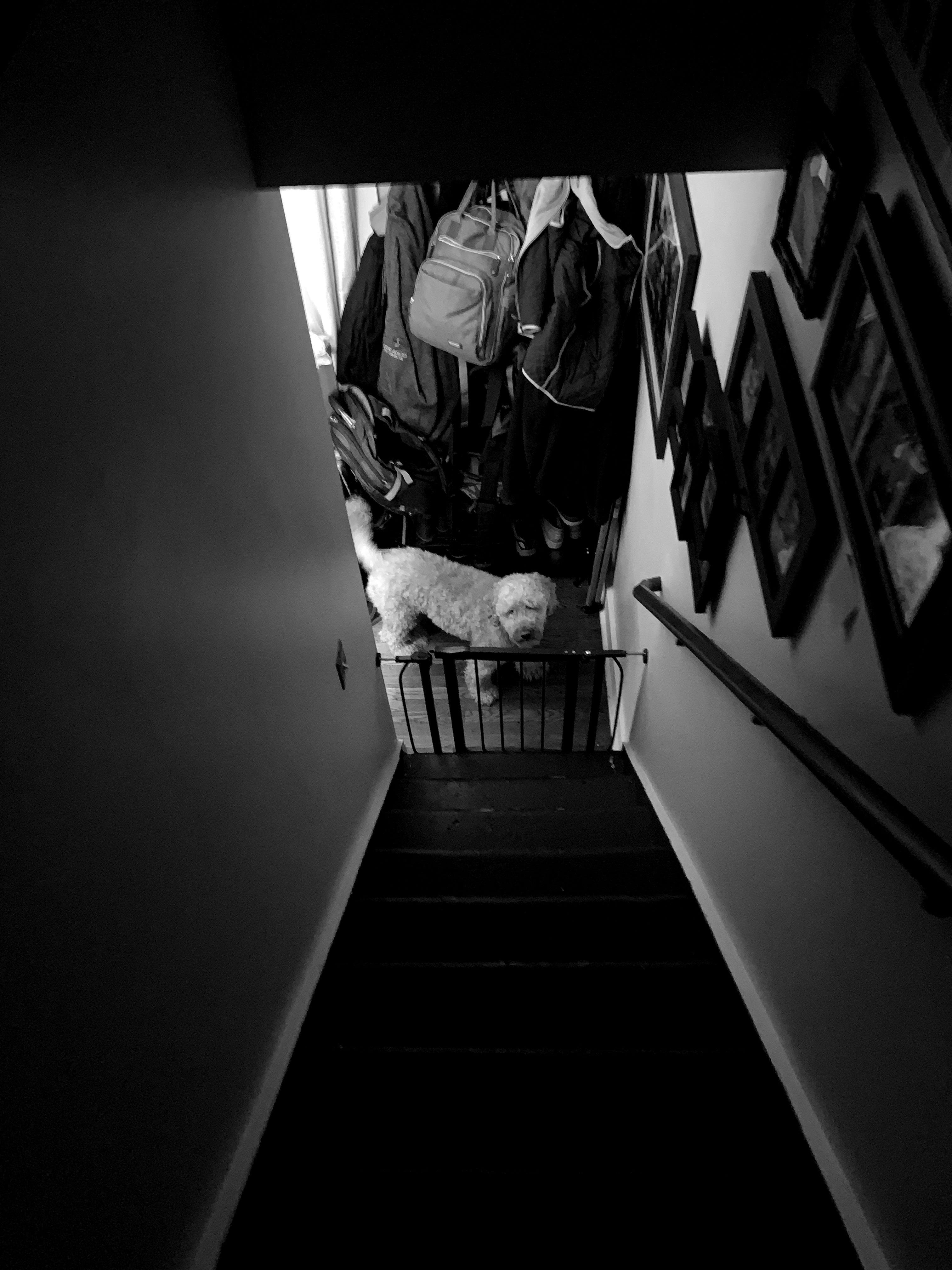
She was referring to our youngest son and to the door above the staircase that led from our dining room to the laundry room, the door that I must have nudged open with the basket of clothes.
I called her right away.
I asked for details about my son’s tumble.
I asked her how she was feeling.
I hung up the phone. Then I did the arithmetic of action and consequence and realized that I was most likely the last one to use those stairs.
“I’m probably the one who left it open,” I acknowledged with a sad-face emoji.
When I arrived home, my mom was watching Zade. I asked whether she saw him after his spill, and she showed me the small welt forming over his left eye. When I left to return to work, she asked, “Why don’t you ever kiss your son?” I gave him two pecks over the eye and went upstairs.
At dinner that night, we went around the table and shared our lows from the day. I told about how my key card was broken, how that meant I had to stalk the two main entrances to my building, waiting desperately for any departing soul, and how the employee I encountered skeptically raised a screwdriver at me when I tried to slip from the cold to the lobby.
“What are you doing?” she had asked me, the suspicion hanging from her face.
It’s tough to get me talking sometimes, but I actually went for a two-for at the table that night: “And then there were the people I killed,” I joked. My real lowlight, I explained, was the two hours I spent trying to give rescue breaths to a broken mannequin in my CPR training.
My parents went next.
“Zade falling down the stairs gave us quite the fright,” they said.
I realized then that I had forgotten my son. He chewed the tiniest wedge of corn bread and didn’t seem to mind.
Later, when all the kids and grandparents were in bed, my wife and I shared some words and then nuzzled into our separate books. She eventually spoke to me just as I was jotting a note on page 144 of History of Wolves, another book she’d given me. I mention the page because that’s the one where our Midwestern narrator finally reveals, after much hinting, the how and why of a child’s death. My note was about neglectful parents, about how the parents in this novel seem so much more with it than the single mom in Love, and yet how they seem willfully ignorant when it comes to the shadow that passes over their boy.3
As I finished the note, Erica said, “This may not be fair, but I’m frustrated that you haven’t shown any emotion about Zade.”
At that time, we were engaged in the ongoing project of teaching our older kids to express emotions. They could earn extra screen time if, rather than storming up the stairs because their sibling got to wash a fork first, they said how they were feeling about that dirty fork and what a solution might be to addressing the fork feelings.
My wife, it seemed, had just earned five minutes of screen time and was inviting me to join in the fun.
But of course I experienced emotion, I thought. When I got your text, I didn’t bother with typing a text. I called right away because I needed to hear the hurt or worry or confidence in your voice, because I needed to know the severity of the fall and how to process the news. That’s emotion, right?
I didn’t quite say that. Instead, I lay there tongue-tied, unsure how to strike the balance between contrition and explanation. I finally admitted to feeling confused because as I thought about each of our interactions during the day, I couldn’t think of a moment where she shared an emotion about the accident.
“I was trying to stay calm for the sake of everyone else,” she explained, “so that your parents and the older kids would not freak out.”
And then she drove the screwdriver right into the heart of the matter, right into the place of truth and fear, the place that hurts. “I don’t want you to feel bad. But there is a part of me that wants you to feel bad so that something like this won’t happen again.”
It is a painful thing when the ones you love feel driven to make you hurt for some greater good.
Sometimes I think that bad feelings are like an infection—they should be scoured, medicated, and invited to leave. I’ll admit, there were times I was tempted to tell my older kids that they could think their way out of feeling angry at someone, that they would be happier and healthier if they would simply set their minds on something else.
But maybe an invitation to feeling bad can be cathartic, maybe it can sometimes be the thing to spark change.
I do not only read novels in which children fall into great harm from the actions of their parents. During that year, I read Naomi Alderman’s The Power, in which young women become world cult leaders and powerful mafia dons despite their abusive parents. Or I read Jeff VanderMeer’s Borne, in which the protagonist raises a fantastic piece of sentient biotech to be a monster with a somewhat moral compass.
It’s possible, somehow, to not break your baby.4
It dawned on me then that my little kiddo had probably crawl-scooted his way to those stairs in my direct wake. He didn’t just fall into the enticing trap of unexplored downward gloom because I left the door open; he was following his father. In some part of his brain, he heard my voice and my steps echo down those stairs, and he came crawling after.
I want to be a father who it is safe to follow.
I want to be a father who will kiss my child and tell him he is loved, to be a father who shares how I feel without needing an invitation.
I want to be a father who mends things rather than breaks things, a father who knows when couch cushions form a secure barrier and when doors must be closed.
I want to be a father who is present and attentive to this world and not only the world of work or the mind (or the phone).
Something’s telling me that I won’t learn these skills from books.
Maybe my son can teach me.
Ørstavik also wrote Ti Amo, which was my favorite of the novels I read in 2023.
The good news here is that we now live in a house where there’s a second-floor laundry chute, and the other bedrooms are on the same floor as the laundry room.
In my spreadsheet where I track my reading, I summarize Emily Fridlund’s History of Wolves as an atmospheric, gut-punchy novel in which “a Minnesota babysitter has her life shaken by Christian Scientists.”
I heartily recommend reading the premise of The Power and then skipping the book. That’s because the gimmick of the novel is a fun and poignant one, and it gives Alderman a quick way to pose questions about metooism and gender-related power. But as one of my fellow book clubbers said, The Power feels like it was written specifically for TV. Conversely, Borne feels totally unique and new, as if someone took forceps to Vandermeer’s skull, pried it open, and extracted a writhing, wild curiosity into this world.