

The Haunting
Andrew quilts together a story on partial estrangement, high school graduation, and how we mediate community burdens.

In church a month ago, we handed out quilts to graduating seniors.
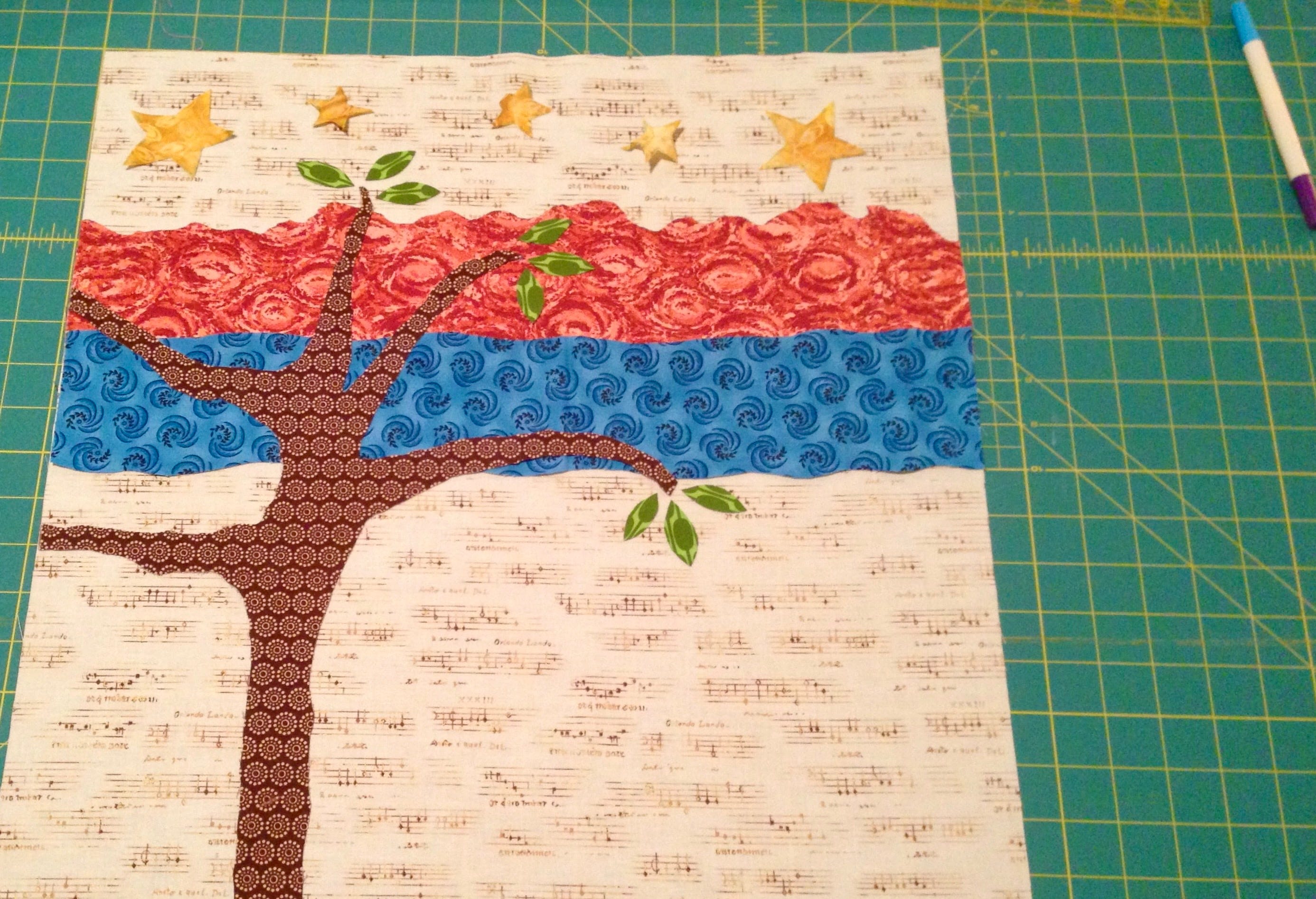
That morning I happened to sit by myself in the back row of the upper balcony. The patterns of fabric rolled over the pews before me like waves, small hummocks of color and care.
The congregation raised our hands in prayer over the quilts and the teenagers and the people from other lands who would receive the remaining quilts as gifts.
I saw the nervous excitement of the teens up front as they shared their upcoming plans with the pastor, and I felt the congregation smile back with mirth and pride.
I watched as the students draped the fabric around their shoulders and drew it tight, as we agreed to support them in prayer and deed.
I felt a sense of that joy and the gravity of commitment.
And I felt an absence.
Our adopted son was also a senior, but on that Sunday there was no quilt for him there.
It had been two-and-a-half years since he left that place—there one Sunday, gone the next—so it would have been awkward and jarring if one had been set aside for him. That quilt would still be there now.1
From my perch above, I thought of the careful work of the quilting volunteers, of the time and creativity they had invested. I imagined clouds of batting settled into place with pins and rulers, the quiet backstory that we forget when we nuzzle into the warmth and hue of a good thing.
But I also felt the shadow of a heretical doubt. I felt a smug certainty that no one thought of Hiroshi or his mischievous grin when they put their love into those stitches. Two-and-a-half years just felt too long and unlikely.
We prayed for the graduating seniors on that day, but I believed then that the only direct, human-invoked blessing he received was when I spoke his name in my mind.
I wondered whether he ever really belonged, this boy who had never heard of Jesus before we took him and his sister to church one day eight years ago.
I wondered whether there was a possible present in which he would have stood there in the chancel and charmed us with his future plans.
I wondered whether other ghosts haunt other congregants and how the church might serve us in our haunting.
With the back of my hand, I wiped at my eyes.
* * *
On that morning, I didn’t actually think Hiroshi would graduate.
He’s a very bright kid—a natural at chess, math equations, and Rubik’s cube algorithms—but he had struggled with attendance since departing our home and moving in with his biological aunt.
That’s an understatement.
Before his departure, Hiroshi had never intentionally skipped class, at least not in middle school or during his freshman year. But after that night, it’s like the seal had been peeled, and truancy leaked into his bones. He struggled with school attendance in the same way a vegan struggles to eat meat.
No, that’s not right, either.2
Perhaps he struggled with attendance in the same way any teenage boy might struggle when they discover that directives about going to class are a mirage, that no one will come knocking on your door if you miss class.
Perhaps he struggled the way any kid with childhood trauma might struggle when old patterns of familial disruption, divided allegiance, and caregiver mental health loom larger than a lecture in fourth-period math.
Perhaps he struggled the way any sophomore might when abruptly liberated from parental expectations, incentives, and consequences, when the adults who love you and claim the role of caretaker won’t do the hard work of caretaking.
Perhaps he struggled because those first days and weeks and months of absence marked him, carving new patterns in the fabric of his day but also in the way he felt he was perceived by teachers and peers. Perhaps one of the lessons he learned from his biological father was that the worst thing in life is to be noticed, that it is unsafe to be singled out.
Or perhaps the opposite is true.
Perhaps he struggled because in our desire to preserve our relationship with Hiroshi and his sister and respect their autonomy, Erica and I did not trigger the nuclear codes and launch a full-scale mama and papa bear attack when they left. We consulted with therapists, psychiatrists, other adoptive parents, a lawyer, and a judge, but (or, more accurately, and therefore) we did not call the police. We tried peacemaking rather than tug-of-war, love rather than fire. Later, we tried behind-the-scenes wrangling with school counselors and staff.
But maybe Hiroshi needed the violence of a grand gesture, the theatrics of a fight. Maybe he struggled to attend school that winter and the following two years because he believed we, his mom and dad, had let him go.
Just like his biological mother had let him go.
Just like his biological father had let him go.
Just like his biological aunt and grandmother had let him go.
Just like the first social worker who handled his case had passed him on to a new social worker.
Just like his first foster care parents had let him go, had even helped with the transition to our home.
Those sentences each have their nuance.
The mother, father, aunt, and grandmother, the first foster care parents—they all loved Rana and Hiroshi and fought for them in their own ways. I can read the stories of those messy battles in the case notes we inherited from the state. You can see it in the shrapnel I’ve gathered and reassembled across these Substack pages.
I won’t second-guess the decisions we made then—I am proud of how Erica and I handled the earth-shattering transitions of that time. We were like the Phinney quiltmakers, a thoughtful, careful team, trying our best to put something (back) together.
I still don’t know what Hiroshi might have wanted from us during that time, just as I don’t know the actual cocktail of factors that contributed to his sudden and then sustained truancy.
But on that Sunday, a month before graduation, I understood that the statistics would have their cruel victory and that Hiroshi would join countless other youth who have their potential crushed by broken family and bureaucratic systems.
There, in the upper balcony of Phinney Ridge Lutheran Church, I had accepted what an AI bot would later tell me about Hiroshi’s chances. The bot explained that an adopted kid who runs away during sophomore year to live with a biological family member has only a 15 to 25 percent chance of graduating.
The percentages seem made up, but the narrative the bot extrapolated felt scary and real: “This character is highly unlikely to walk across the stage with a standard diploma—instead, the realistic path forward is that they stop attending, the aunt ignores the school district’s outreach, and they officially drop out.”3
But, I thought, hasn’t this character had enough? Can’t somebody please give this kid a break?
* * *
Hiroshi never appeared before my church community that Sunday.
He didn’t slink out of from the vestry and upstage the usual order of things. There was no fattened calf to celebrate a return.
We raised our arms in blessing, someone said Amen, and I exited out the back without speaking to a soul.
But somehow, praise to God and great honor to Hiroshi, he did graduate.
Somehow Erica and I found ourselves on a grassy hill outside the high school football field, and we watched as row after row of blue gowns proceeded to the stage and then back to their seats.
We sat there on a blanket and tried to put words on a card we had purchased the day before when we learned he would walk and that we were invited to come.
Or I suppose I should say that my wife wrote something on the card and I signed it because I could not condense all of this into a single sentiment. I could not contain my surprise or find the safe words to convey longing and felicitation.
I did not know how to tell him he had done an ordinary thing that was extraordinary.
Thank you for reading! Help me find more readers and pay for daycare by (1) liking the post, (2) leaving a comment, (3) sharing the post on Substack, (4) upgrading to a paid subscription, and/or (5) giving me a one-time tip.
In fact, the church staff had asked my wife whether to name our son in the service or provide him with a quilt, and she aptly decided that there was no way to make that seem right. In other words, I don’t intend this as a critique of what happened there but, I suppose, as a meditation and reminder to myself that we never really know what people are carrying to a worship service.
And Erica told me this is an awful analogy.
Here’s are some other relevant statistics:
a. Most American kids graduate high school—about 88 percent of them, in fact.
b. But generational legacies matter. Kids with a parent who didn’t graduate have a graduation rate below 70 percent.
c. Kids who wind up in foster care are also likely to have experienced childhood trauma, and this can have lasting effects, in school and beyond. In Washington State only 53 percent of kids who have been in foster care graduate high school.
d. Adoption from foster care does not magically solve a kid’s problems or replace the love they may have for their absent biological family. However, on this metric it definitely helps. When college graduates adopt kids from foster care, those kids’ graduation rates rise to 70-75 percent.
e. For what it’s worth, I also told that AI bot that the aunt had a signed power of attorney. The quote from the bot is slightly condensed from its original form.